Fruit Pear Embroidery Design Review for Business
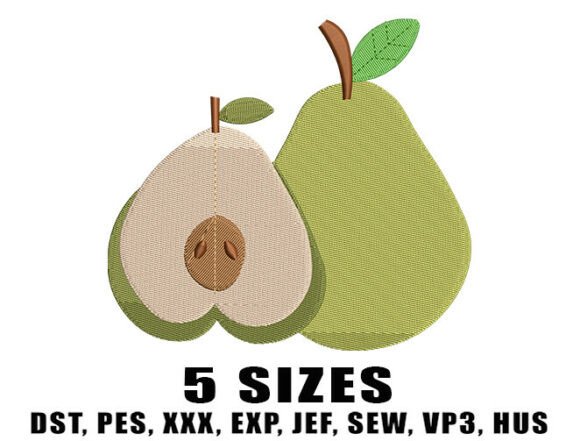
As an embroidery designer who spends most of my days digitizing logos and prepping files for commercial production, I am always on the lookout for versatile design assets that can elevate a small business's brand. Recently, I took a close look at the Fruit Pear Embroidery Design, a set described as adorable whole and half pears intended for kitchen towels and fruit-themed projects. While the marketing suggests a home-crafting angle, my professional eye immediately saw potential far beyond the hobbyist realm. For boutique owners, café operators, and handmade brands, this machine embroidery design offers a unique opportunity to inject personality into branded merchandise without sacrificing professionalism.
First Impressions: Balancing Playfulness and Polish
The first thing that strikes me about the Fruit Pear Embroidery Design is its visual tone. Based on the description of "cute" and "adorable," one might expect something overly juvenile. However, in the context of modern branding, there is a massive market for friendly, approachable aesthetics. This design feels rustic yet clean, making it an excellent candidate for businesses that want to project warmth and authenticity. Whether you run a farm-to-table bakery, a floral studio, or an organic pet brand, the imagery of a whole pear alongside a sliced half suggests freshness and natural ingredients.
The availability of five sizes, ranging from 3.8 inches up to 6.8 inches, is a significant advantage for commercial application. In the world of commercial embroidery, scalability is key. A design that looks great at 6 inches but falls apart at 3 inches is a liability. Having multiple pre-scaled versions in the embroidery file set means we can adapt the artwork for everything from a large back patch on a work shirt to a subtle chest accent on a uniform.
Real-World Applications for Small Business Merch
Let's talk about where this design actually shines in a business environment. The versatility of the Fruit Pear Embroidery Design allows it to function across various product categories:
- Staff Uniforms and Aprons: For a café or juice bar, embroidering these pears onto high-quality linen or canvas apron embroidery projects creates an instant thematic connection. It reinforces the menu's focus on fresh produce without needing heavy text.
- Embroidered Patches: This is perhaps the strongest use case. By stitching the design onto twill or felt backing, you create a durable embroided patch that can be sewn onto tote bags, denim jackets, or caps. Patches are trending heavily in small business merch because they add a tactile, premium feel to the finished product.
- Tote Bags and Packaging: A simple tote bag design featuring the pear motif serves as a walking advertisement. When customers carry these bags, the recognizable shape builds brand recognition.
- Seasonal Promotions: While the design is evergreen, it fits surprisingly well into autumn campaigns. Given its categorization under Thanksgiving, it could easily be adapted for harvest festivals or holiday gift sets, adding a seasonal touch to your custom apparel lines.
Technical Considerations for Production
Before rushing to load this digital embroidery file into your machine, there are critical technical factors to evaluate. As a designer, I always advise testing the stitch density first. Fruit designs often rely on smooth fills to mimic the skin of the fruit. If the density is too high, the fabric may pucker, especially on lighter materials like cotton tees. Conversely, if it is too low, the coverage might look sparse and unprofessional.
When applying this to curved surfaces, such as the front of a cap, careful attention must be paid to the hoop size and stabilization. The larger sizes (5.8 and 6.8 inches) will likely require a jumbo hoop, which can be tricky on structured caps. For cap embroidery, I would recommend sticking to the smaller 3.8-inch or 4.8-inch versions to ensure the design sits flat without distortion.
Fabric texture also plays a massive role. On textured fabrics like terry cloth towels or waffle weave aprons, fine details can get lost. The "half pear" element, which likely shows the seed or interior texture, needs to be inspected closely. If the details are too fine, they may merge into a solid blob when stitched on thick pile fabrics. Always run a test stitch-out on the exact material you intend to sell.
Impact on Brand Identity and Customer Trust
In the crowded marketplace of Etsy sellers and local boutiques, visual consistency is what builds trust. Using a cohesive graphic like the Fruit Pear Embroidery Design across your packaging, staff uniforms, and social media mockups creates a unified brand identity. It tells the customer that you pay attention to details.
Furthermore, handmade presentation matters. An embroidered logo carries more perceived value than a printed vinyl decal. It suggests durability and quality. When a customer receives a product with a neatly stitched pear emblem, it enhances the perceived value of the item, justifying a higher price point. This design, with its friendly aesthetic, fosters an emotional connection, making the brand feel accessible and community-oriented.
Essential Designer Notes for Commercial Use
To ensure success with this design in a commercial setting, follow these practical steps:
- Test in Black and White: Before committing to thread colors, stitch the design in a single color to check the clarity of the outlines and the separation between the whole and half pear.
- Review Thread Contrast: Ensure your chosen thread colors provide enough contrast against the garment. A green pear on a dark navy shirt might need a light outline to pop.
- Check Licensing: Always confirm the commercial licensing terms of the embroidery file before selling products made with it. Ensure you have the rights to use it for commercial embroidery projects.
- Create a Printable Mockup: Use the design files to create a printable mockup for client approval before stitching. This saves time and thread if the placement or size isn't quite right.
- Stabilizer Selection: Match your stabilizer to the fabric weight. Heavier items like tote bags may need a cut-away stabilizer for long-term durability, while lighter aprons might do well with tear-away.
In conclusion, the Fruit Pear Embroidery Design is more than just a cute motif for kitchen decor; it is a strategic asset for small businesses looking to differentiate themselves. With its range of sizes and charming aesthetic, it bridges the gap between playful creativity and professional branding. By paying attention to the technical details of stitch density, fabric compatibility, and placement, embroidery shops and brand owners can leverage this design to create memorable, high-quality merchandise that resonates with customers.